For developers
One endpoint returns the whole model.
REST and JSON with a bearer token. No client library, no build step, no query language to learn.
Start free
- 1
- request returns every type, field, route and event
- 0
- SDKs to install or keep in step with a schema
- 19
- signed webhook events, each naming the path to re-read
Environments
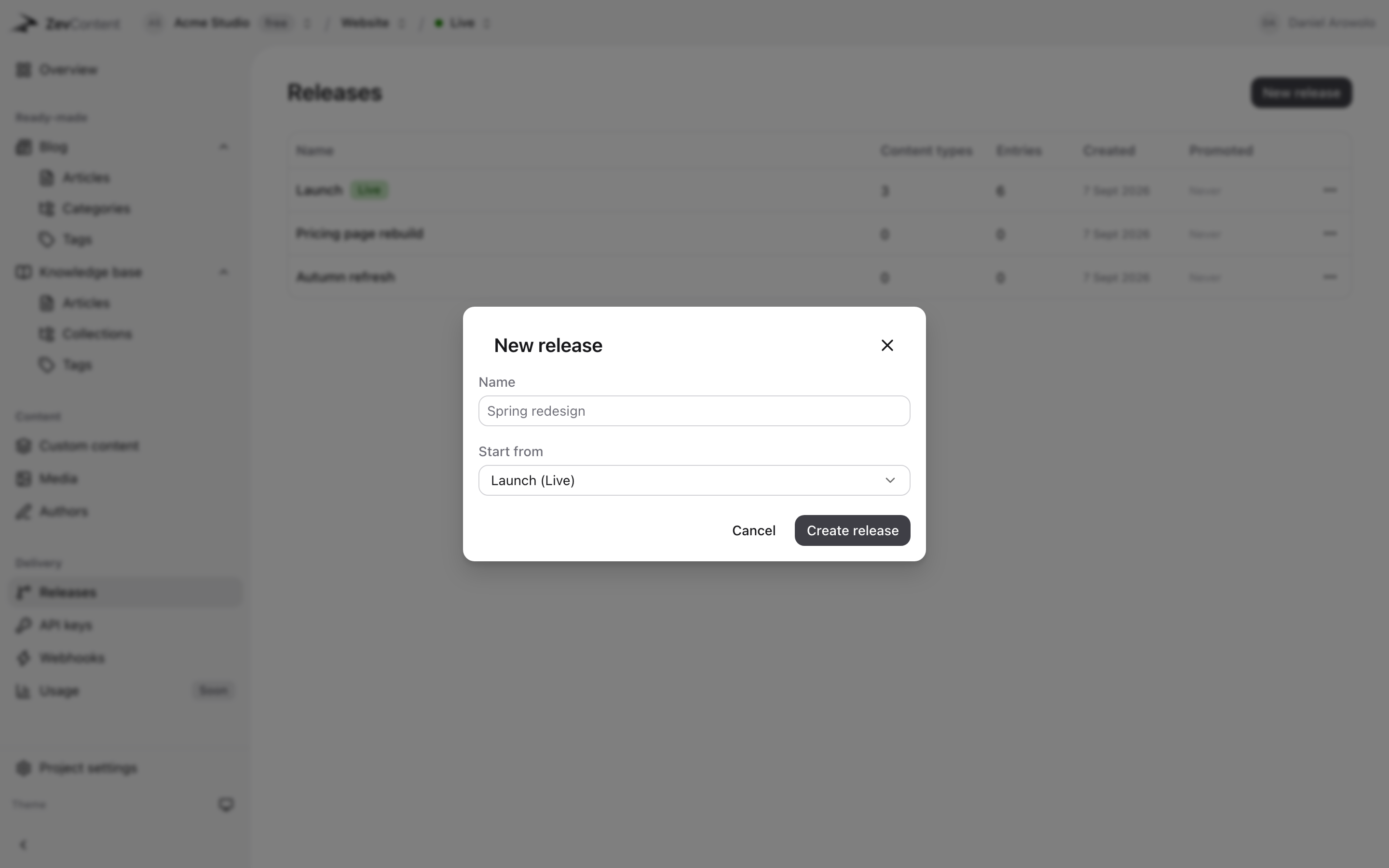
Work on the next version without touching this one.
A release is a full copy of the project: types, fields, entries and every link between them. Build the next structure inside it, point a preview deployment at it, and promote when it is right.
- Preview a release with one query parameter
- Promotion is atomic; no reader sees half of each
- One event fires when it lands, so a cache knows
The API
It describes itself, so you never guess.
One introspection call returns the whole contract: every content type and field, the exact response shape of each one, every endpoint and every webhook event. It is generated from the same definitions the API serves, so it cannot drift.
- Filter and sort on any field the type declares
- A refused request names the fields that would have worked
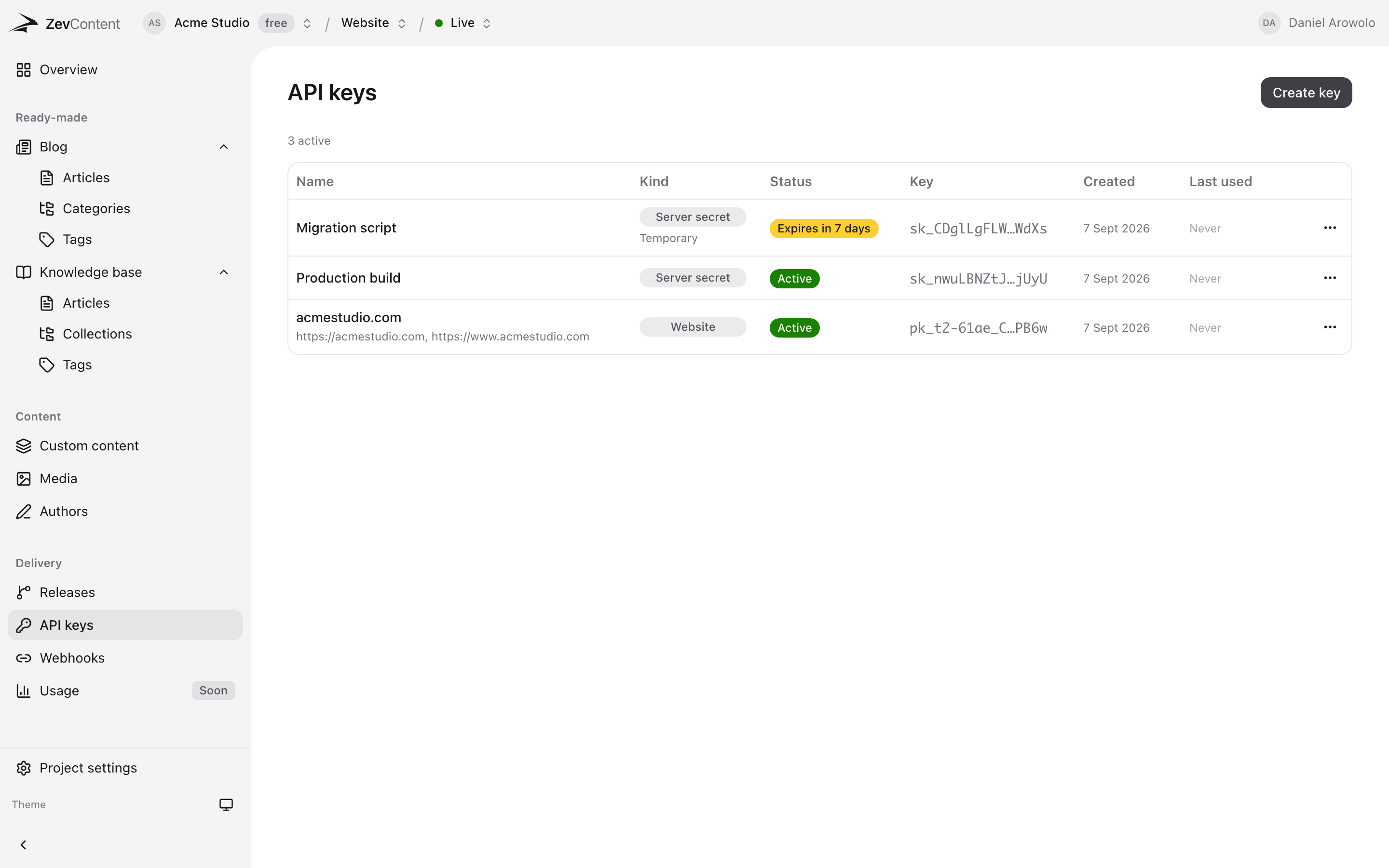
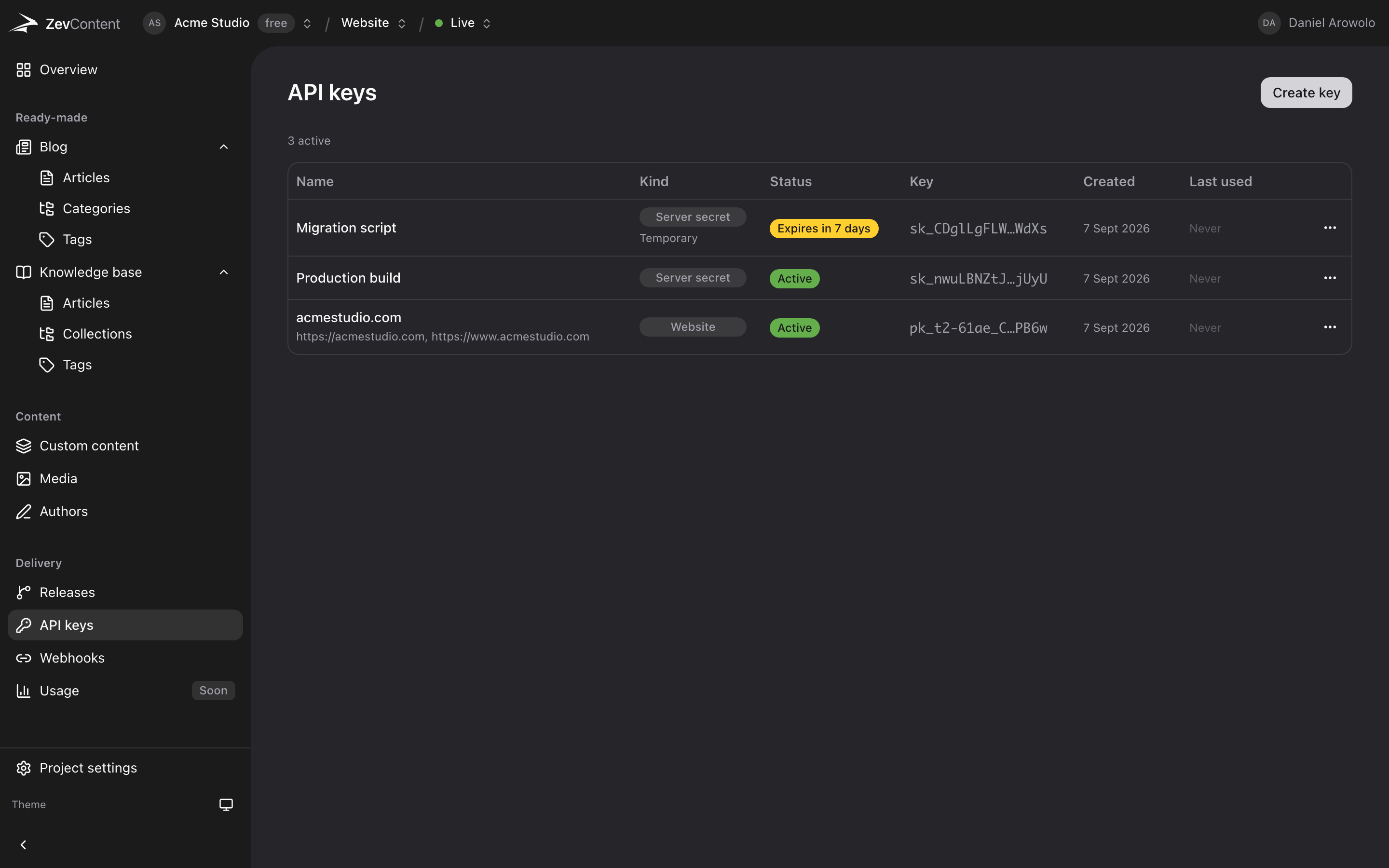
- Publishable keys locked to an origin, secret keys for servers
The model
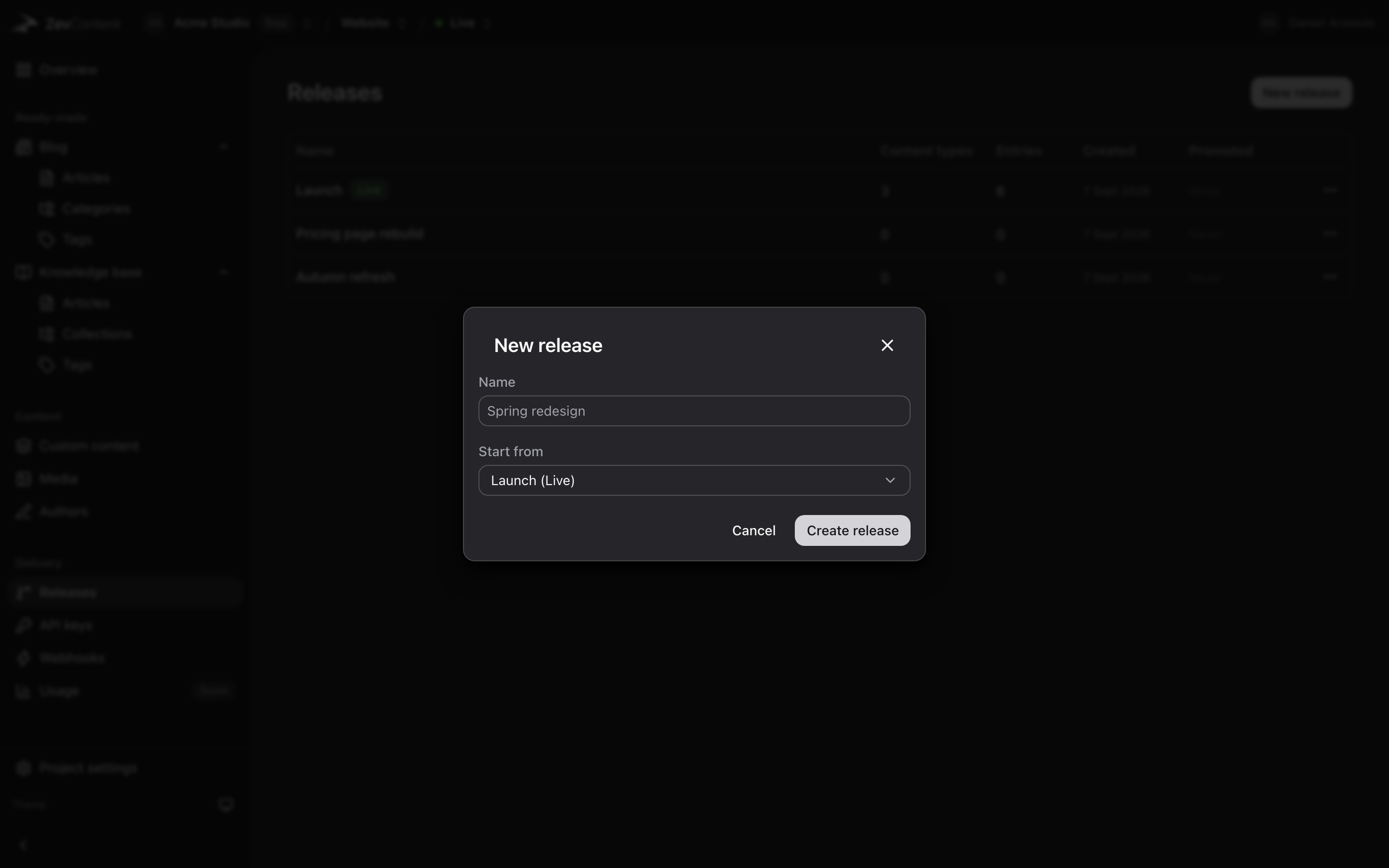
Structure is yours to shape.
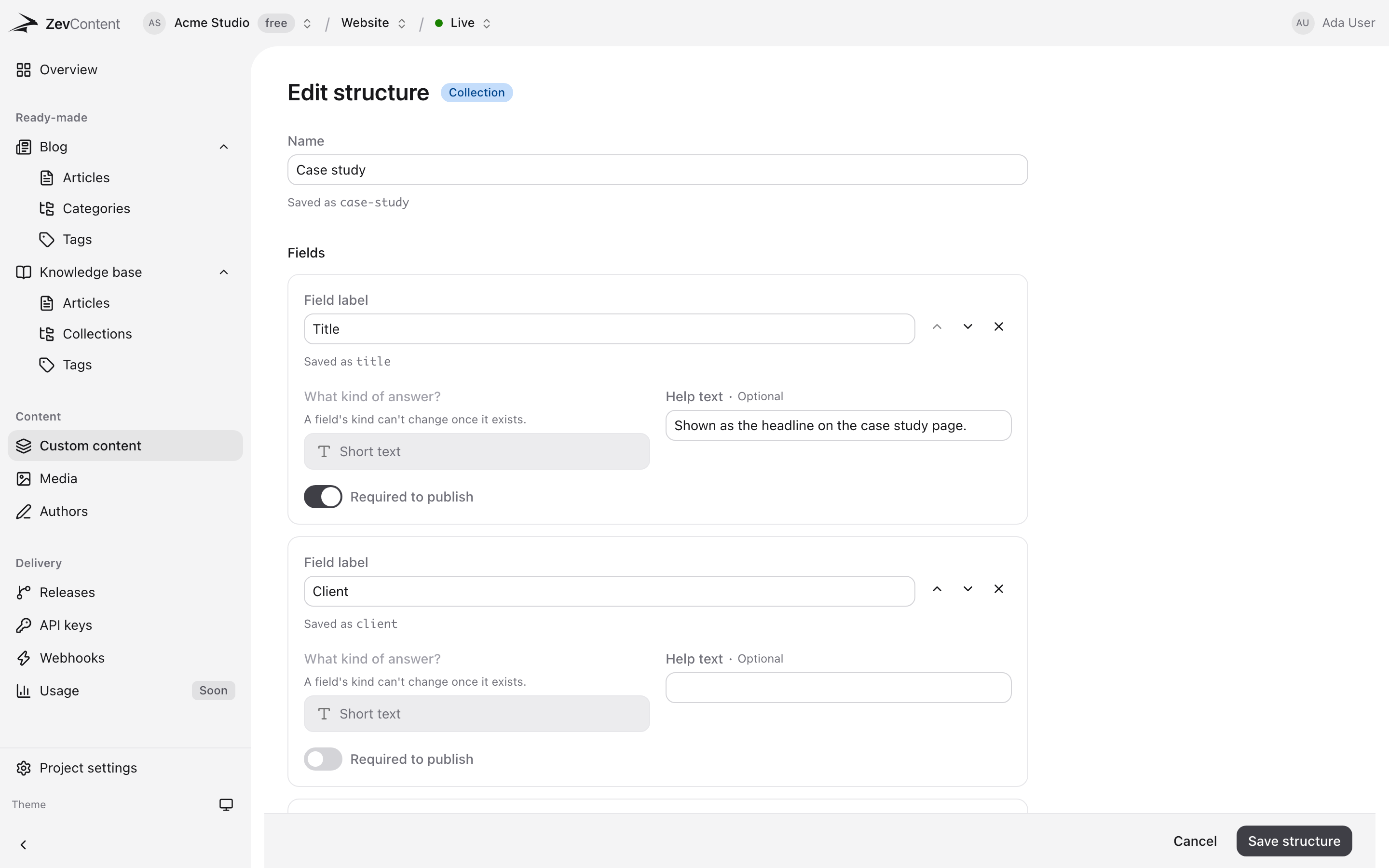
Fourteen field types, references between entries, and links that store an id rather than a URL. Define it in the dashboard or push it through the schema endpoint from your own repository.
- Singletons for a page, collections for everything else
- References resolved one level deep on read
- Ask any entry what points at it before you delete it
Your content, in your stack.
REST and JSON with a bearer token. No client library to install, no build step to add, nothing to keep in sync with a schema.
- Next.js
- Astro
- Nuxt
- React
- Vue
- Svelte
- Laravel
- Remix
Anything that speaks HTTP works, including the ones not listed. See the quickstart
Documentation that answers the next question.
Written for the moment you are stuck, not for a tour.
Frequently asked questions
What developers ask before they start.
Is there an SDK I have to adopt?
No. It is REST and JSON with a bearer token, so fetch is the whole client. Nothing to install, nothing to keep in step with a schema.
How do I know what a project contains?
One introspection call returns every content type, field, response shape, endpoint and webhook event. It is generated from the same definitions the API serves, so it cannot drift.
What does a bad request get me?
The fields that exist. Errors name what would have worked instead of only what failed, which is the difference between one retry and reading the reference.
Start with a project and a key.
Free while we are in beta. Paid plans when we ship them, and never a surprise bill.